
Abstract Wall Art Ideas
By Prizt2026-10-017 min read
Abstract wall art ideas for every room — the main abstract styles, how to match colours to your space, sizing and placement rules, and room-by-room picks. Sizes from ₹559.
Abstract art is the easiest genre to live with and the hardest to get wrong. Because it does not depict a specific subject, it never clashes with your furniture, your travels or your taste — it simply adds colour, texture and mood.
It is not one style, though. A soft watercolour wash and a hard-edged geometric print do completely different jobs in a room, and the sizing rules decide whether either one looks deliberate.
This guide covers the main styles of abstract art, how to match colour to your space, the sizing and placement rules that apply to every abstract piece, and room-by-room ideas — plus answers to the questions people ask most.
01Why abstract art works almost anywhere
Most art asks a question: does this subject match my room? A landscape has to suit the palette, a portrait has to suit the mood, a photograph has to suit the era. Abstract art sidesteps all of it. With no subject to match, it works through colour, shape and texture alone — which is exactly why interior designers reach for it first.
That flexibility makes abstract art forgiving, but not foolproof. It still has to be the right size, in the right colours, at the right height. Get those three things right and an abstract piece makes a room look designed rather than decorated.
02Abstract styles, and what each one does for a room
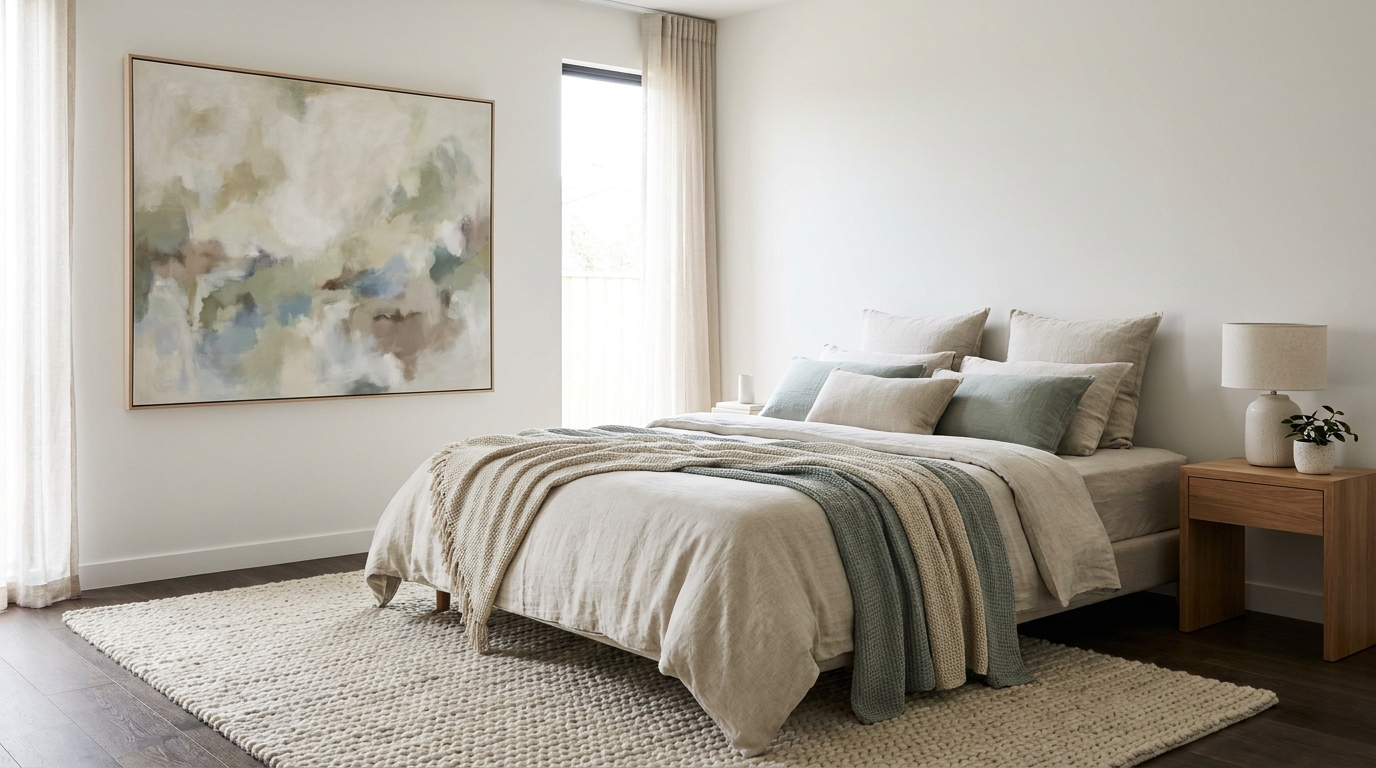
Soft and expressive. Loose brushwork, watercolour bleeds and muted tones. These read as gentle and quiet — perfect over a bed or in any room you want to feel restful. A pastel piece like this abstract beach canvas adds colour without shouting.
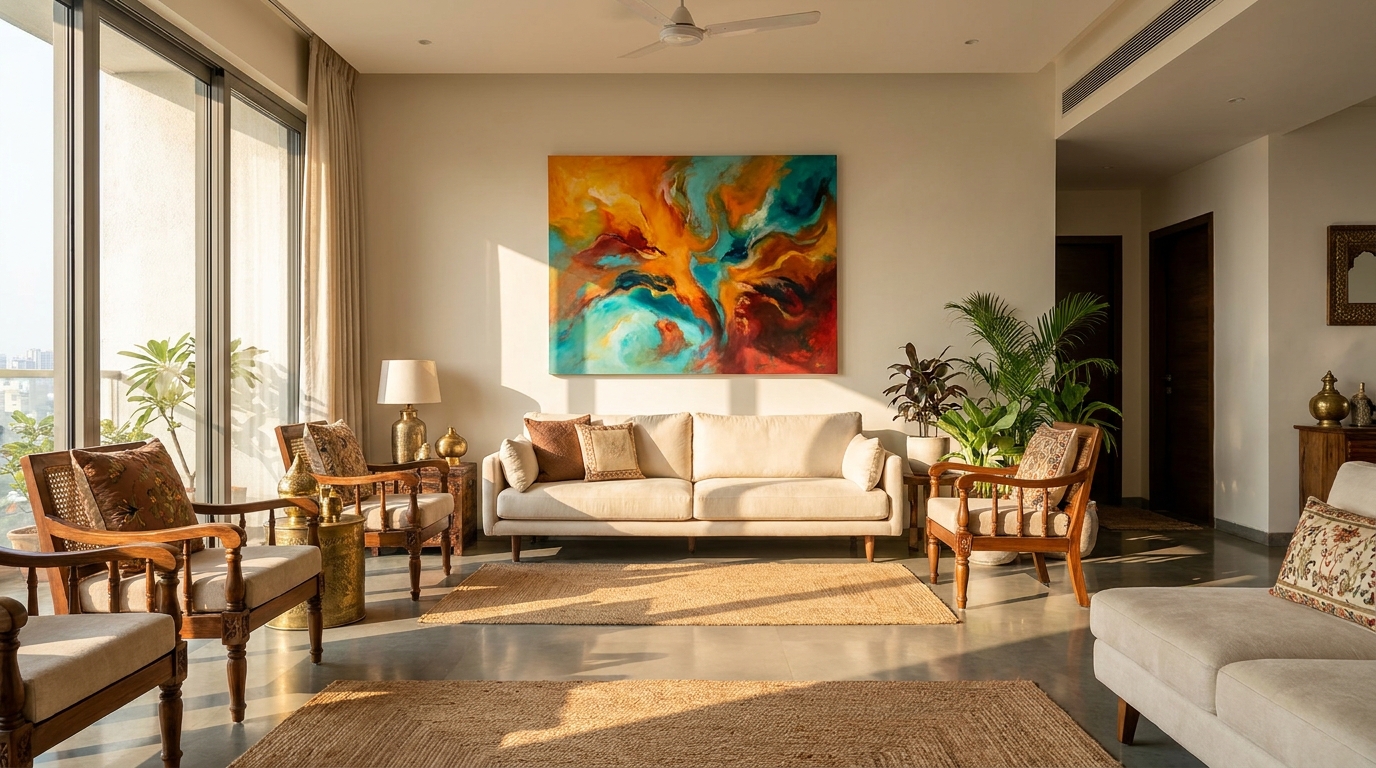
Bold and gestural. Big sweeping strokes and saturated colour. This is the statement-maker: it gives a plain room energy and an unmissable focal point. Something like Celestial Spheres does the decorating for the whole room.
Geometric. Clean shapes, lines and repeating forms. Geometric abstracts feel modern and ordered, so they sit especially well in offices and minimalist rooms. An earthy piece such as these abstract arches or this Kandinsky-style line art keeps a neutral room interesting without clutter.
03One statement piece, or a coordinated set?
One large piece and a grouped set both work — they just do different things.
One big abstract creates a single, confident focal point. It is the right move when the wall is mostly empty or the room already feels busy.
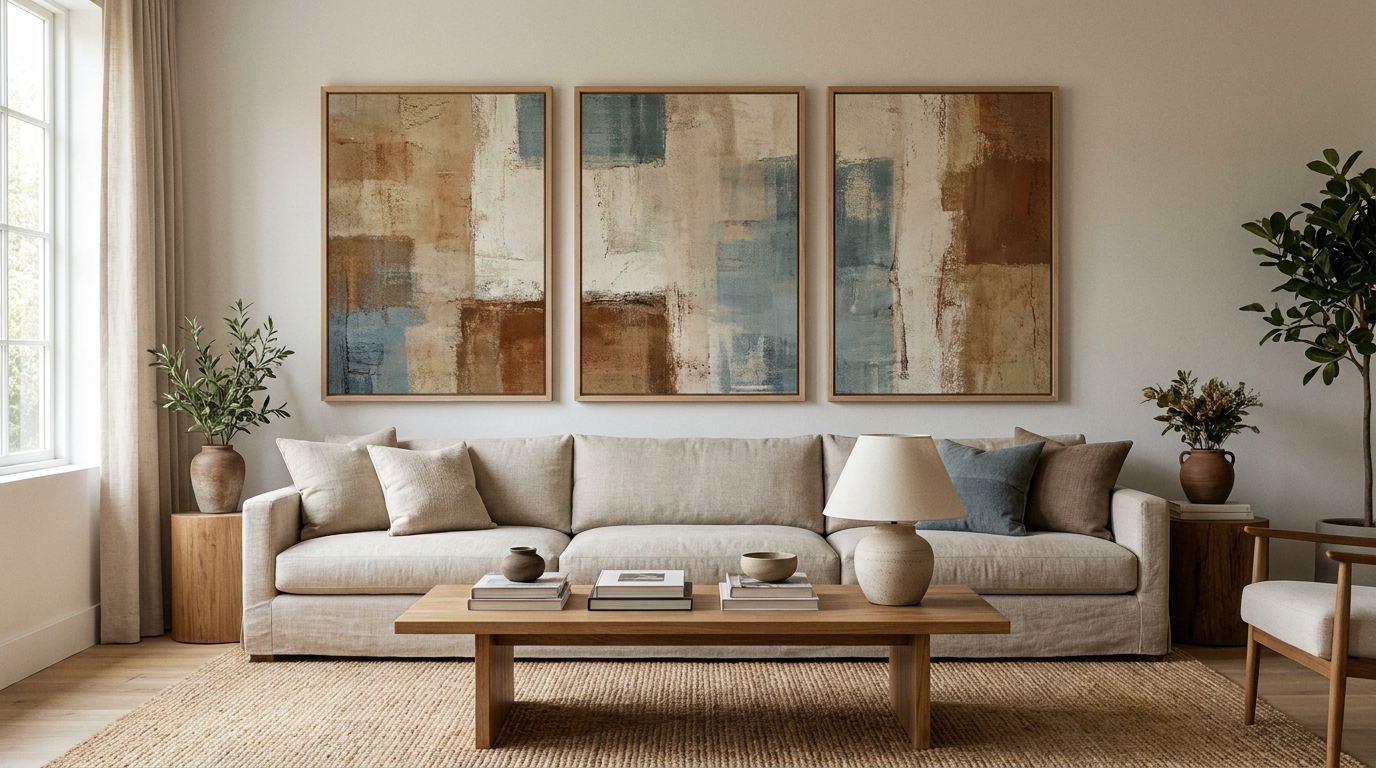
A coordinated set — two, three or a triptych — works on wide walls and in rooms that want a gallery feel. Keep the frames 5–8 cm apart so they read as one unit, and keep the palette consistent across the set. Sticking to one or two colour families, as in this Kandinsky-style line art, stops a group from looking chaotic.
The mistake to avoid is a single small print centred on a big wall, or several unrelated pieces scattered edge to edge. Commit to scale and let the group read as a whole.
04Choosing colours for your room
Abstract art gives you two colour strategies, and both work beautifully.
Match the room. Pull one or two colours from what is already there — cushions, rugs, curtains, even the bedlinen — and choose art that repeats them. A calm bedroom in soft greens and blues suits a piece like this earthy geometric print; it looks intentional because it already belongs.
Add the colour the room lacks. A neutral room can take a bolder piece as its only hit of colour. A cool-toned celestial print lifts a warm beige space instantly.
A simple ratio keeps any room balanced: roughly 60% dominant colour, 30% secondary, 10% accent. In a bedroom, favour cooler, muted tones; in a living or dining room you can push the accent brighter.
05Sizing and placement rules for abstract art
The rules are the same as for any art, but abstract pieces make sizing mistakes obvious because there is no subject to anchor them.
Width. Let the art span two-thirds to three-quarters of the width of the furniture below it. Over a 200 cm sofa, that is roughly 130–150 cm of art.
Height above furniture. Leave 15–25 cm between the top of the sofa or headboard and the bottom of the frame.
Height on a bare wall. Centre the piece about 145–150 cm from the floor — roughly eye level for an adult.
Go bigger than feels safe. Abstract art, especially, rewards scale. A large statement canvas such as Celestial Spheres makes a modest room feel designed. When you are torn between two sizes, size up.
06Abstract art, room by room
Living room. This is where abstract art earns its keep. One large piece above the sofa anchors the room; a coordinated pair or triptych fills a very wide wall.
Bedroom. Keep it soft. Match the art to your bedding and choose gentle, low-contrast pieces for a restful feel.
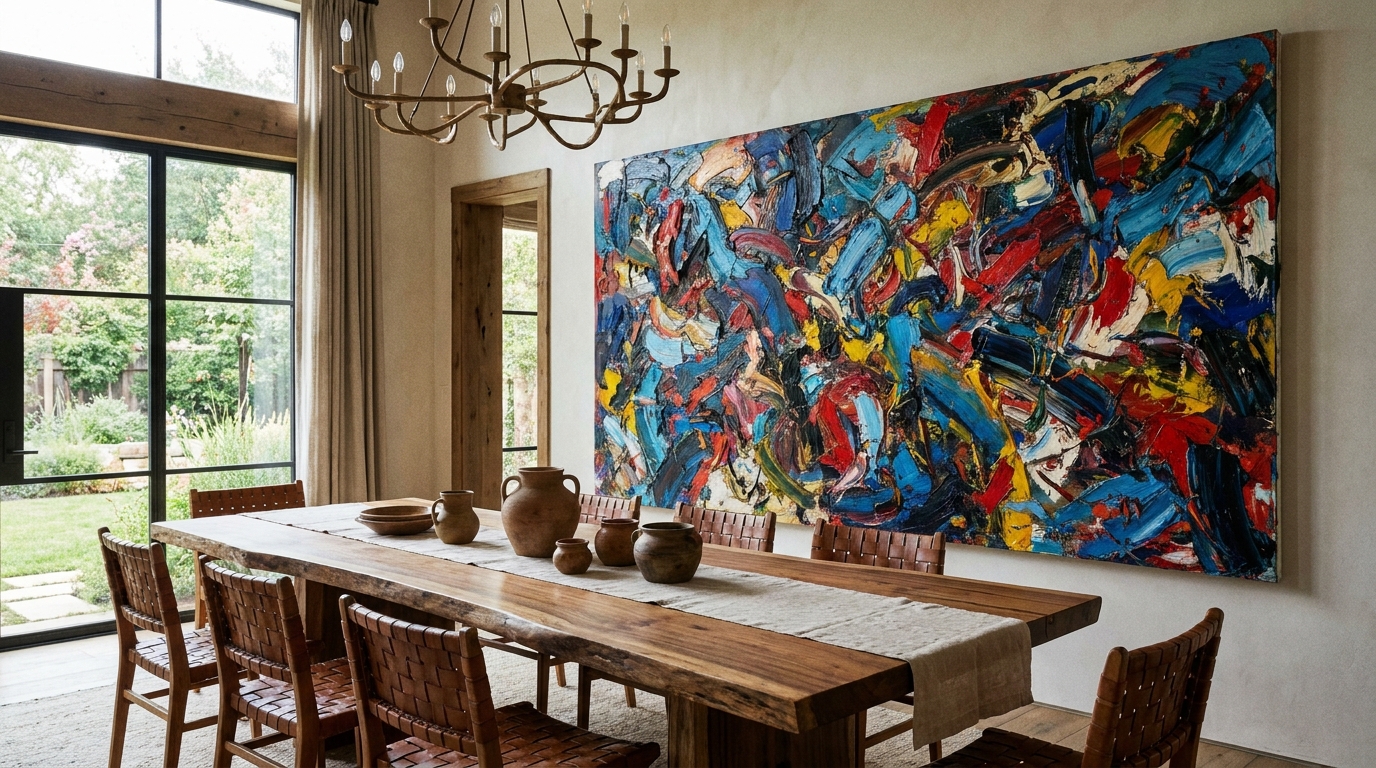
Dining room. A dining wall can carry drama — an oversized bold abstract becomes the centrepiece and gives the table a backdrop.
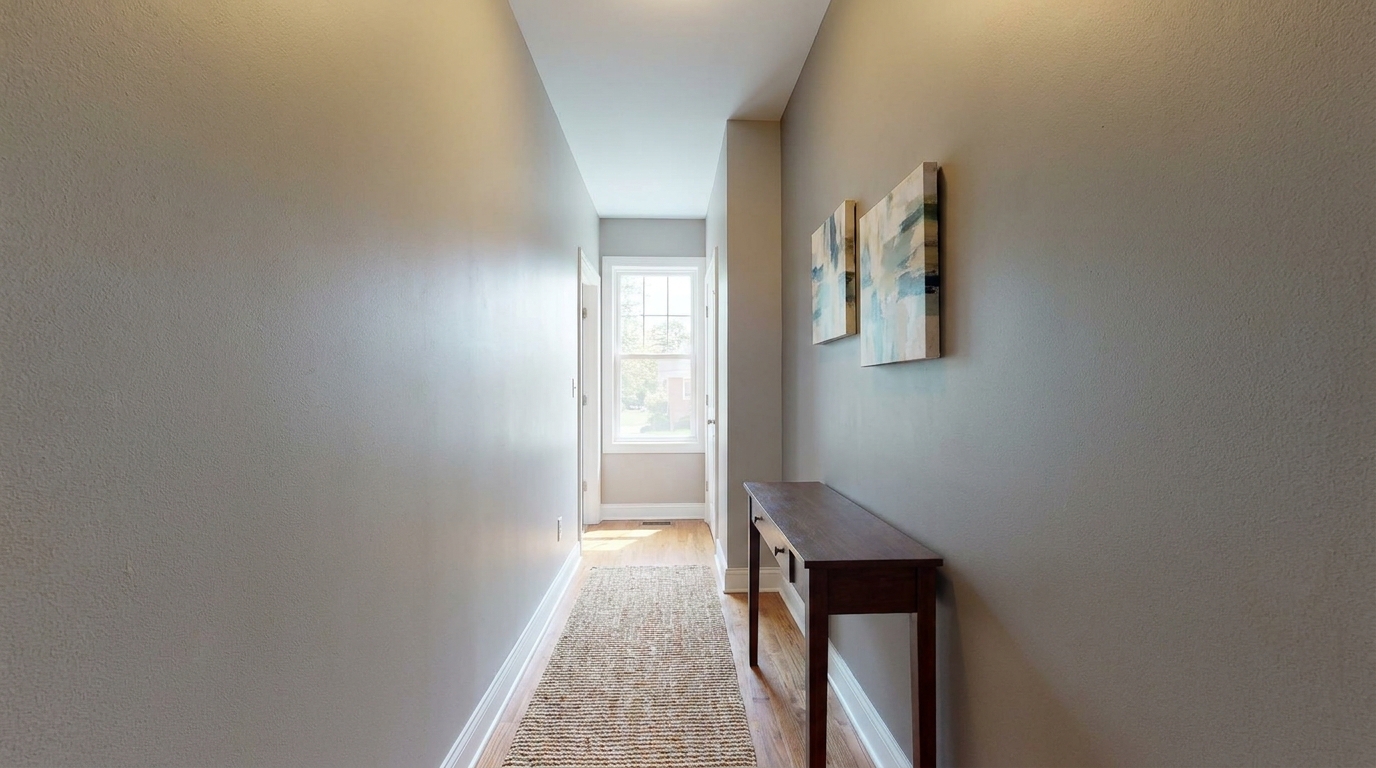
Entryway and hallways. Small spaces suit small groupings. Two small abstract prints above a slim console, as in the image above, make a narrow entry feel considered without crowding it — try a pair such as this abstract beach print or this yellow-and-grey geometric.
Home office. Geometric abstracts keep the space calm and focused; avoid anything so busy that it pulls your eye off the screen.
07Your abstract art checklist
- Choose a style: soft and expressive for calm rooms, bold and gestural for statements, geometric for modern, ordered spaces.
- Match art colours to the room, or let one bold piece supply the colour the room lacks.
- Let the art span two-thirds to three-quarters of the width of the furniture below it.
- Leave 15–25 cm above a sofa or headboard; centre bare-wall art about 145–150 cm from the floor.
- For a set, keep frames 5–8 cm apart and repeat one or two colour families.
- When torn between two sizes, size up — abstract art rewards scale.
08FAQs
Abstract wall art uses colour, shape, line and texture instead of depicting a recognisable subject. Because it does not show a specific scene or object, it adds mood, colour and calm to a room without clashing with the rest of the decor.
Start with a piece you love
Every Prizt canvas is printed on premium canvas in India and arrives in protective 4-layer packaging — so what lands on your wall is exactly what you picked.
Keep reading
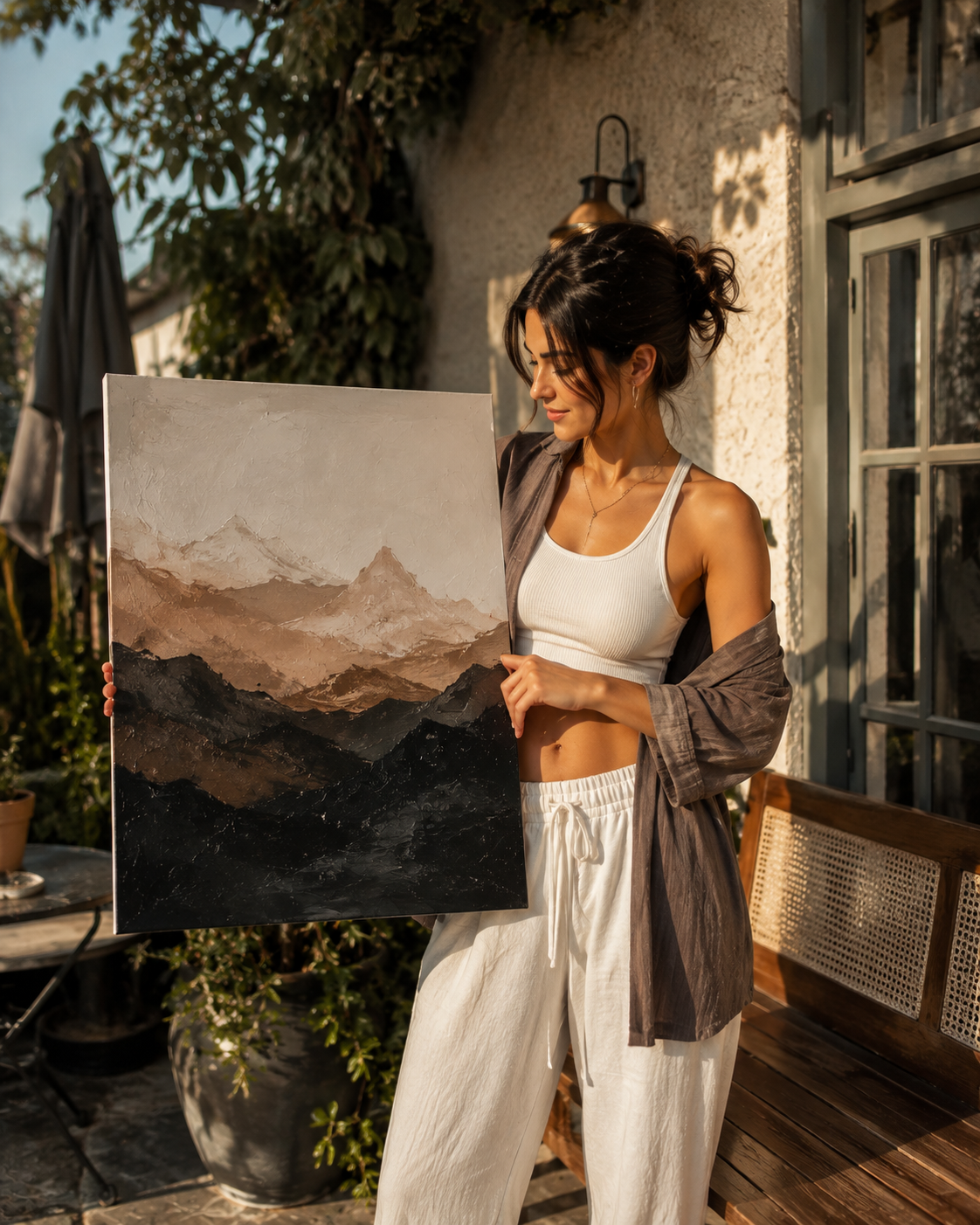
Canvas Print Size Guide: Choosing the Right Size for Every Room
Not sure which canvas size fits your wall? Here is how to match our 8 canvas sizes to the room, wall, and look you want.
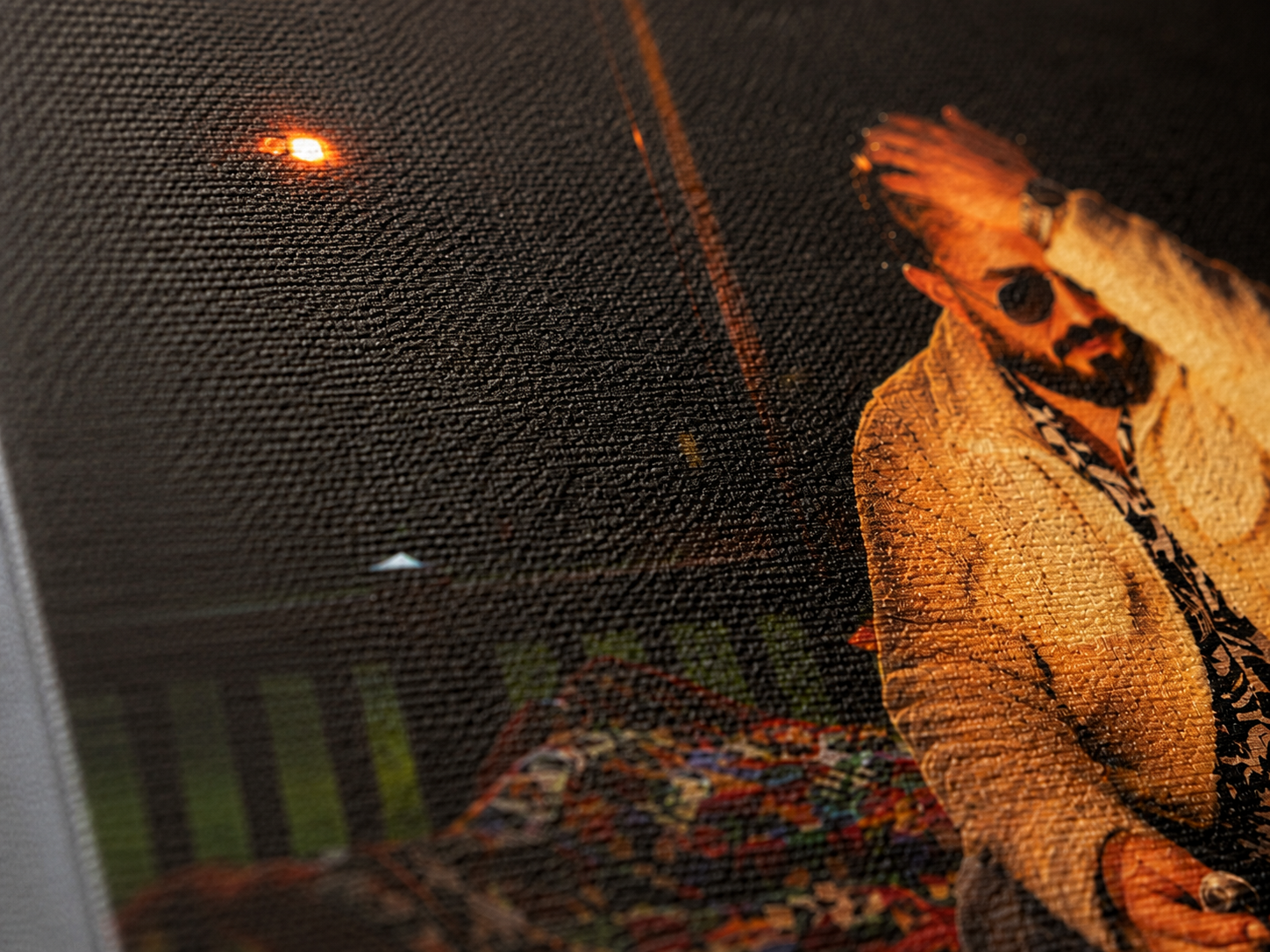
What Is Eco-Solvent Canvas Printing? Why Premium Canvas Beats Posters & Flex
Eco-Solvent printing uses low-VOC inks on real canvas for rich, durable, gallery-quality art. Here is why it beats posters, flex, and paper prints.
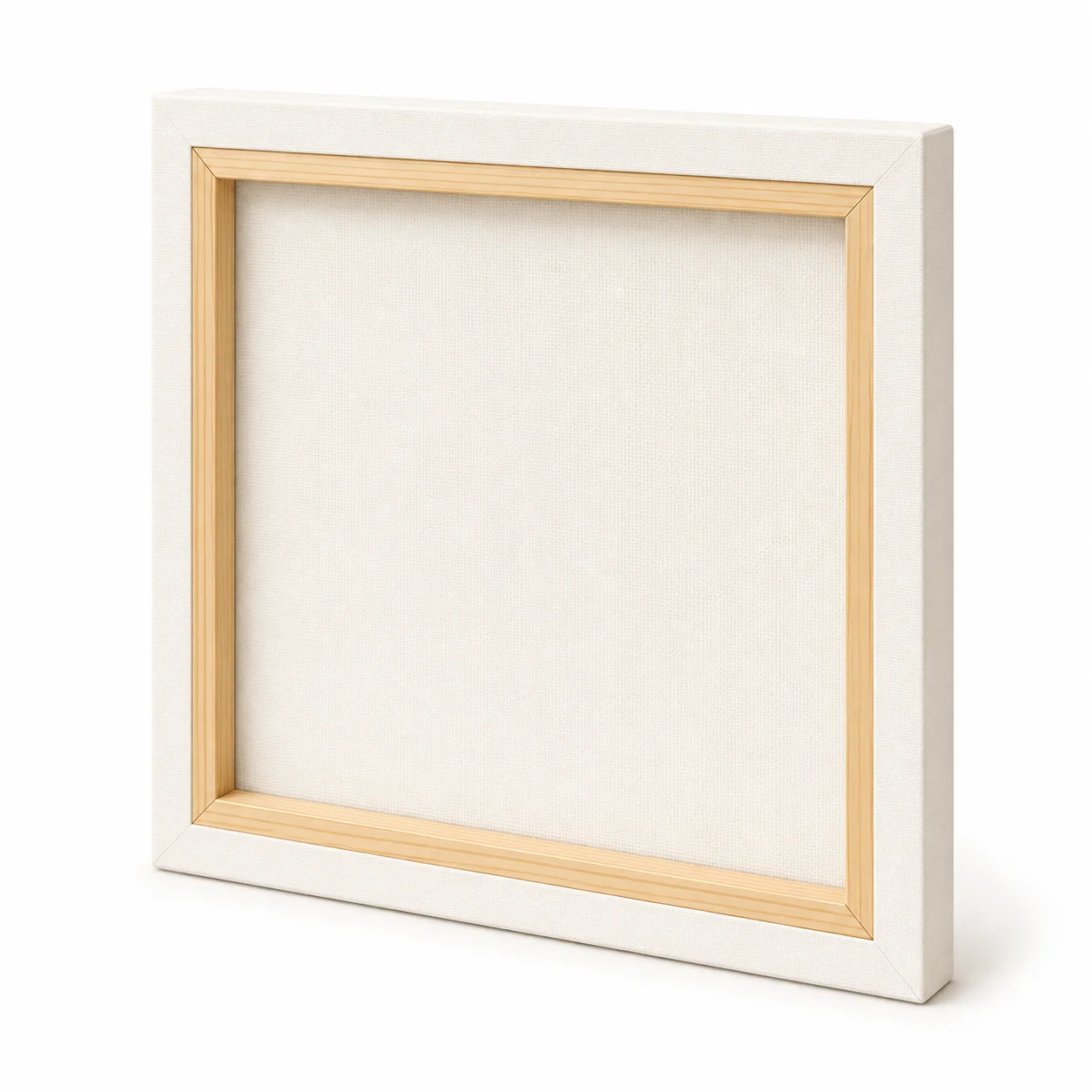
Rolled vs Stretched Canvas: Which Should You Choose?
Rolled ships flat for local framing; Stretched arrives ready to hang on a quality frame. Here is how to decide.
Printed on premium canvas, made in India. Browse the collection