
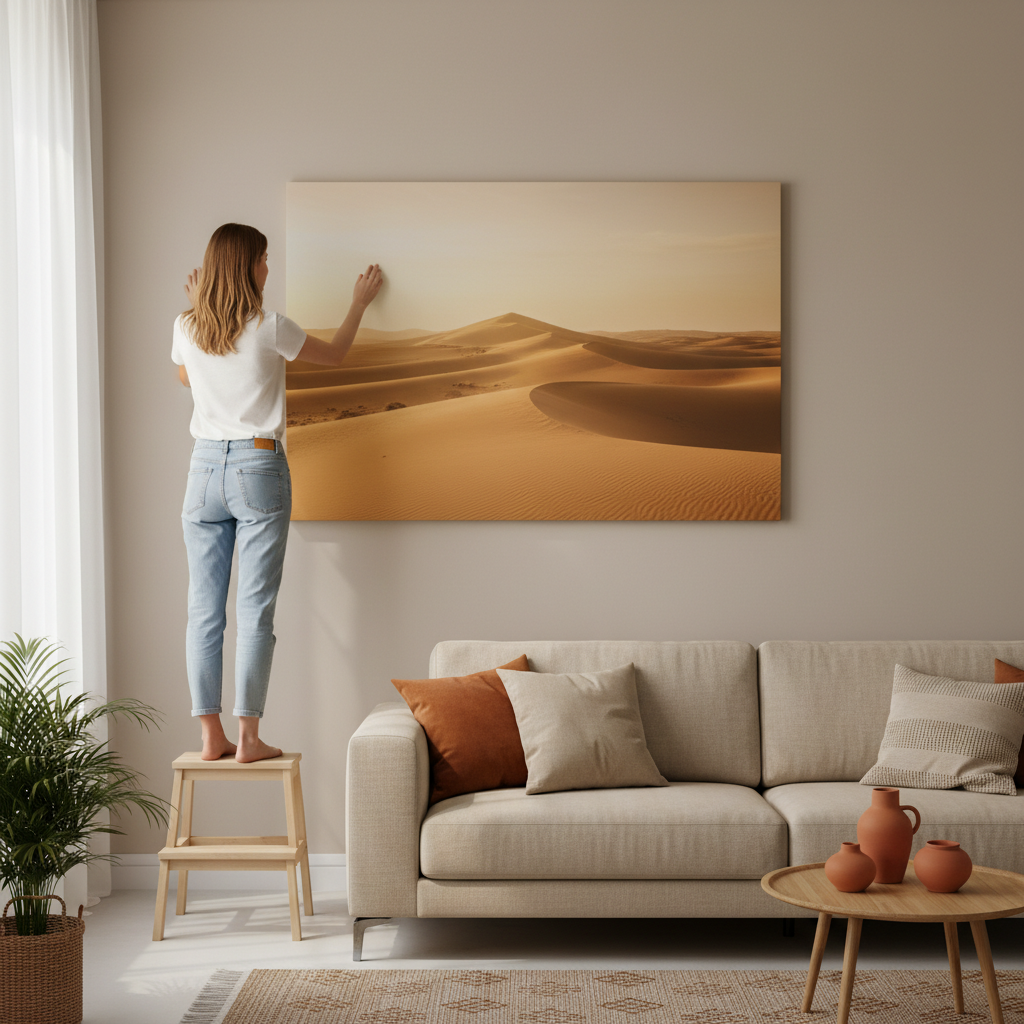
How to Hang Canvas Art: Height, Placement & Step-by-Step Guide
By Prizt2026-09-286 min read
Learn exactly how to hang canvas art — the right height, placement above sofas and beds, tools you need, and renter-friendly no-drill options. Step-by-step guide for Indian homes.
You picked the perfect canvas. Now the part that makes most people nervous: getting it on the wall straight, at the right height, without wrecking the wall. This guide covers the exact rules galleries use, adapted for Indian homes — concrete walls, high ceilings, and rented flats included.
If you haven't chosen your size yet, read our canvas print size guide first — hanging goes wrong most often when the art is the wrong size for the wall.
01The two rules that matter most
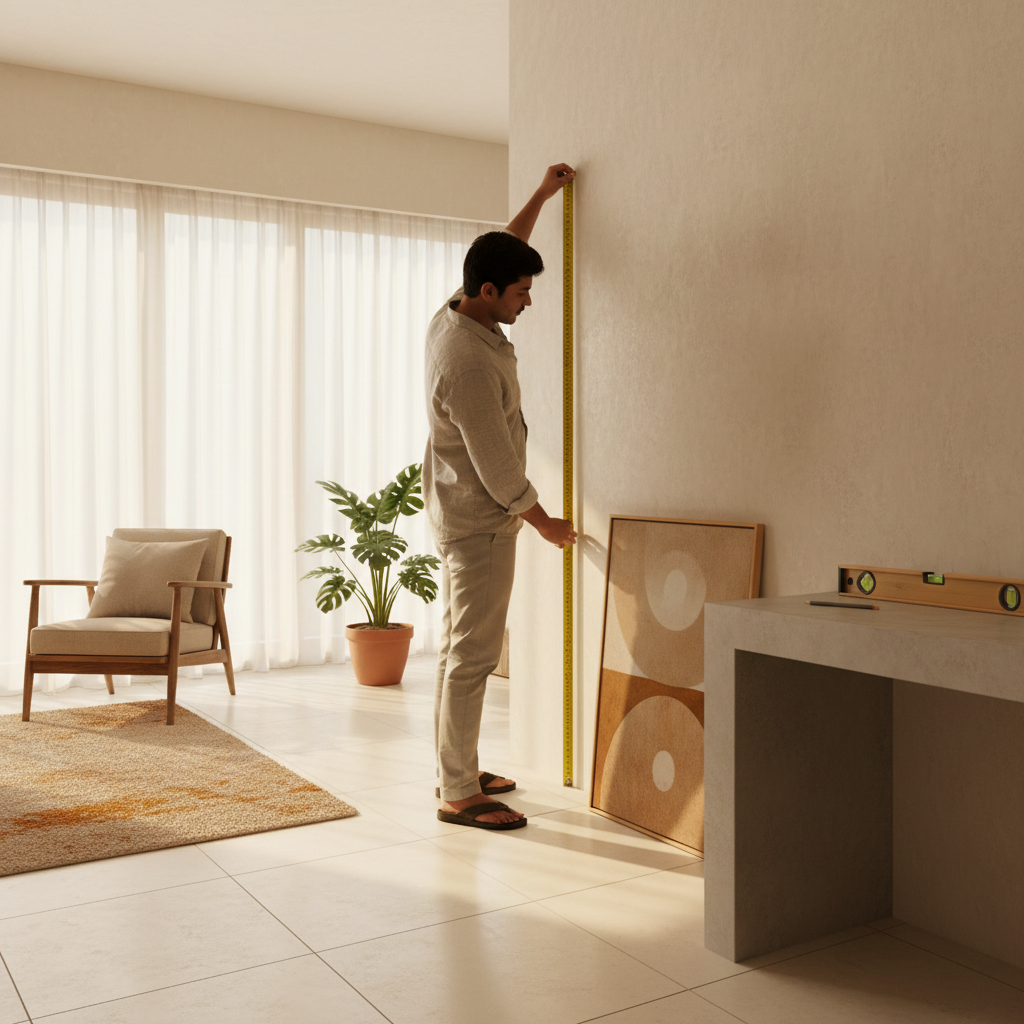
The 57-inch rule. Galleries hang art so the center of the piece sits 145–150 cm (57–60 inches) from the floor. That's average eye level, and it's the single most reliable rule in this guide. When in doubt, center at eye level.
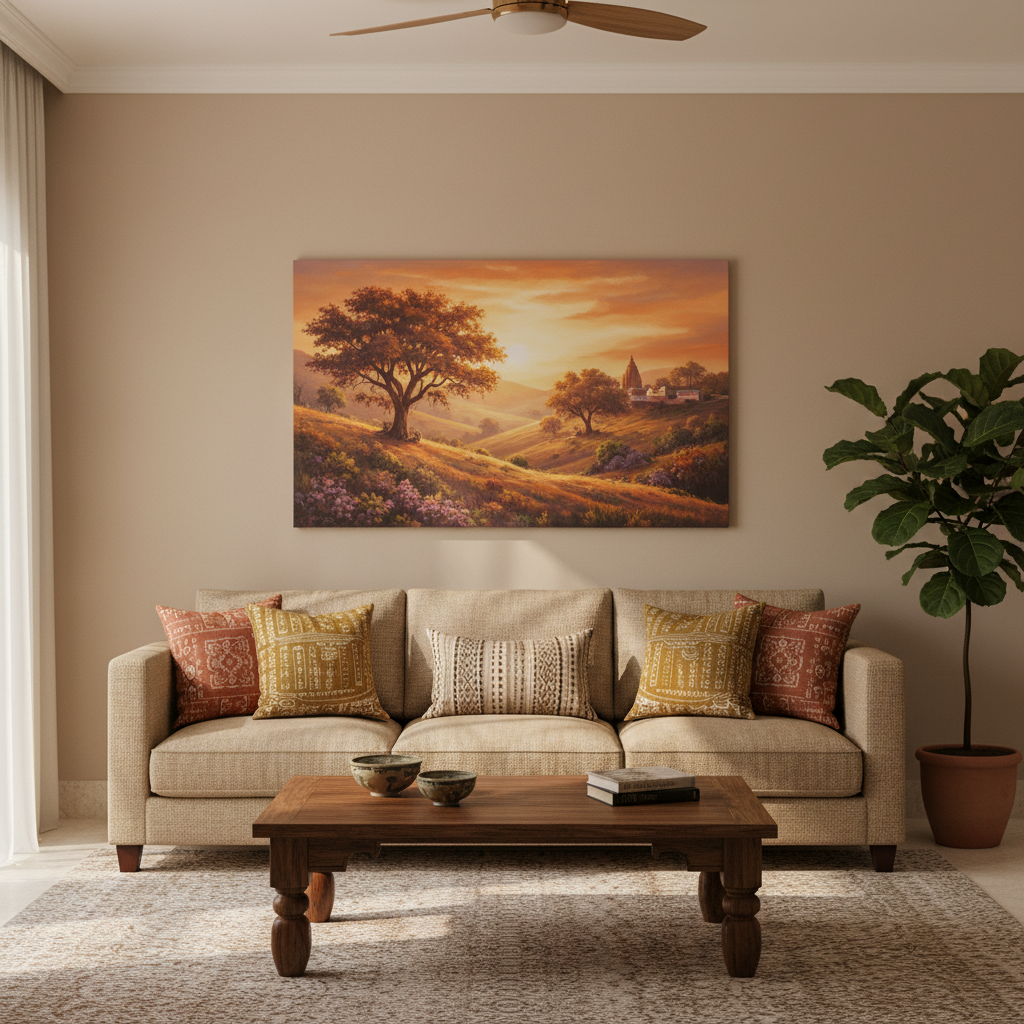
The two-thirds rule. Your canvas should span roughly two-thirds of the width of the furniture below it — a sofa, bed, or console. A 6-foot sofa wants about 4 feet of art above it. One large canvas almost always looks better than several small ones scattered across the same wall.
02Hanging height by situation
- Above a sofa: Leave 15–20 cm between the top of the sofa back and the bottom of the canvas. Center the canvas horizontally over the sofa.
- Above a bed: Leave 10–15 cm between the headboard and the bottom of the canvas. For king beds, go wider rather than taller.
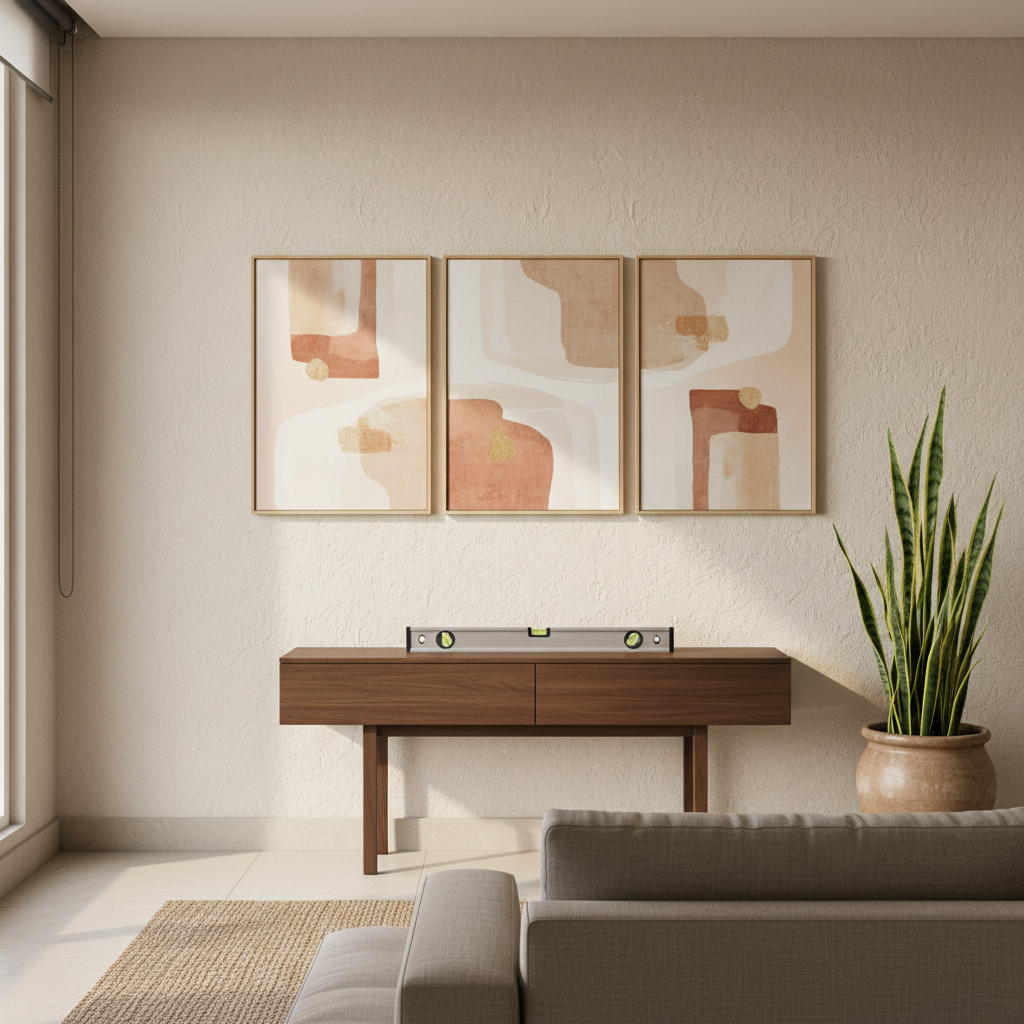
- Above a console or sideboard: Leave 15–25 cm of breathing room. This is the best spot for tall or portrait-orientation pieces.
- Hallway or entryway: Center at eye level (145–150 cm). Hallways suit a series of same-size pieces in a straight line.
- Dining room: Hang slightly lower than living-room height — people view dining-room art while seated, so center around 120–135 cm.
- Staircase wall: Align the center of each piece with the stair slope, keeping the same eye-level offset from each step.
03What you'll need
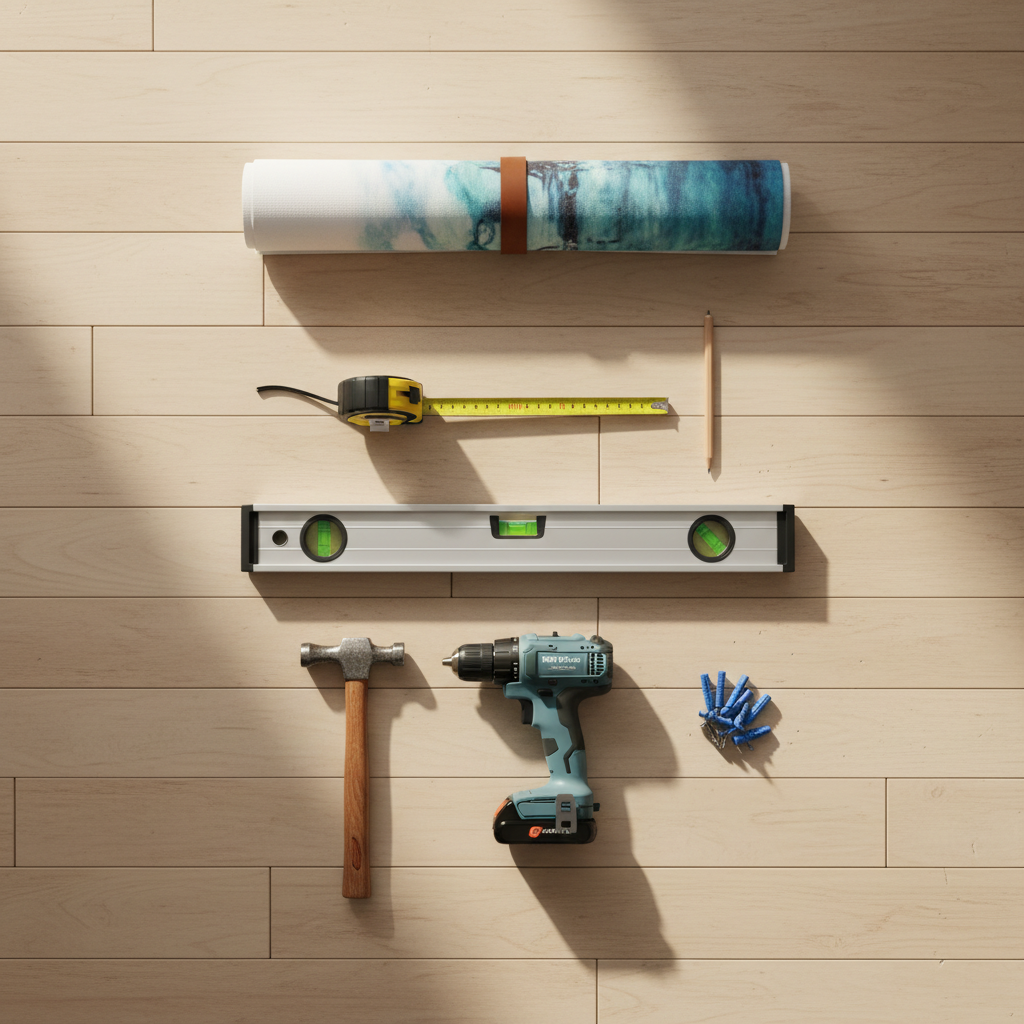
- Measuring tape
- Pencil
- Spirit level (or a level app on your phone)
- Hammer
- The right fixing for your wall (see below)
- A second pair of hands for anything wider than 90 cm
04Fixings for Indian walls
Most Indian homes have brick or concrete walls — standard nails will bend or crack the plaster. Use wall plugs (rawl plugs) with screws: drill a small hole, tap in the plug, drive the screw. For drywall partitions, use proper drywall anchors rated for the weight. For wooden panels, standard screws are fine. Canvas prints are light (a 24x36 inch piece is typically under 2 kg), so you don't need heavy-duty hardware — you just need the right type for the wall.
Renting? Use heavy-duty adhesive strips or removable hooks rated for the weight. Clean the wall with rubbing alcohol first, press firmly, and wait an hour before hanging. No holes, no deposit drama.
05Step-by-step: hanging your canvas
- Mark the center point. Measure and lightly mark where the center of the canvas should sit (eye level, or per the furniture rules above).
- Measure the canvas. Measure from the top of the canvas down to the hanging wire or bracket on the back. Transfer that distance upward from your center mark to find where the hook goes.
- Mark the hook position. Make a small pencil mark on the wall. Double-check it's centered over the furniture below.
- Install the fixing. Drill and plug for concrete/brick, or press on your adhesive hook for rentals.
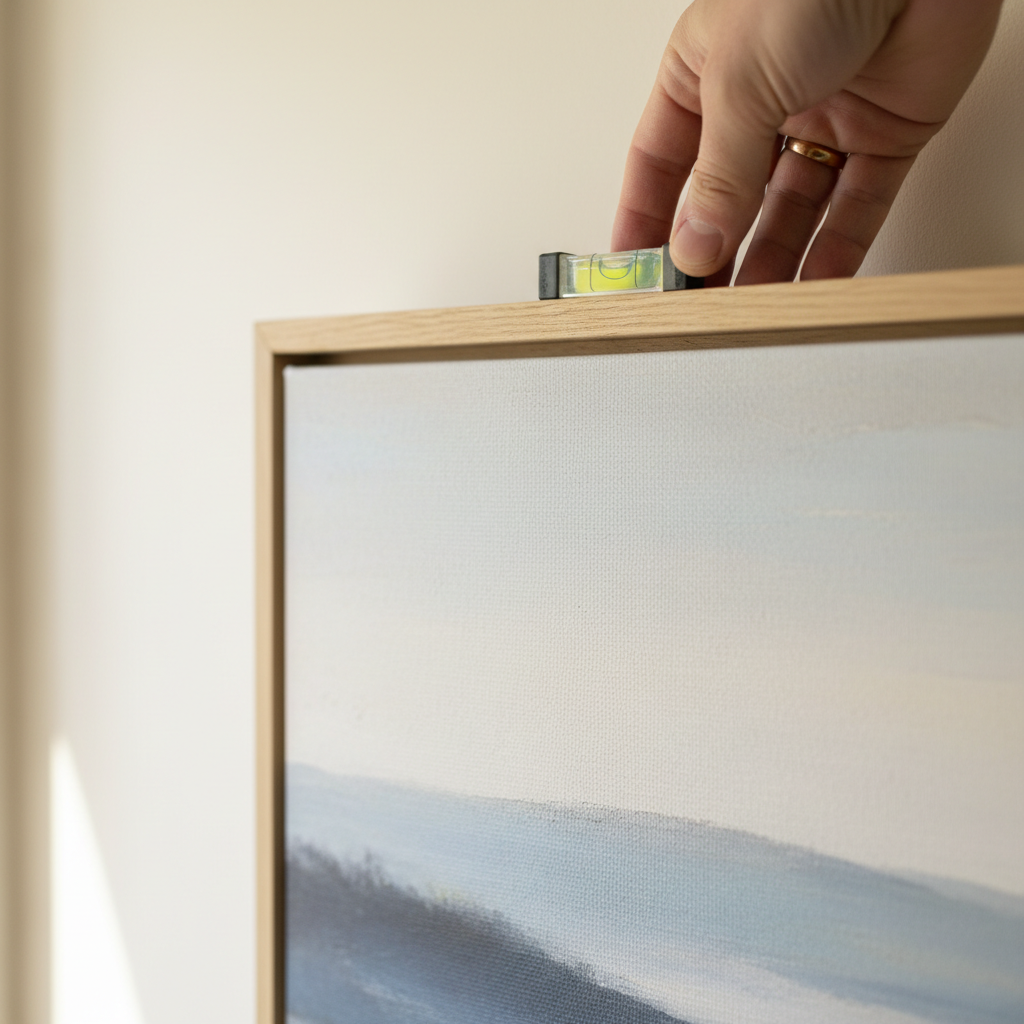
- Hang and level. Set the canvas on the hook, then check with your level and nudge it straight. Step back three meters — that's the real test.
06Hanging multiple canvases
- Gallery walls: Keep 5–8 cm of consistent spacing between pieces. Lay the arrangement on the floor first, or outline each piece on the wall with painter's tape before drilling anything.
- Pairs and triptychs: Treat the group as one unit — the center of the whole arrangement goes at eye level, not the center of each piece.
- Mixed sizes: Anchor the arrangement with the largest piece slightly off-center, then build outward. Consistent spacing matters more than symmetry.
075 mistakes to avoid
- Hanging too high. The most common error. If you have to tilt your head up, it's too high.
- Art that's too small for the wall. A tiny canvas on a big empty wall looks lost. When torn between sizes, go bigger.
- Ignoring the furniture below. Art floating with no visual relationship to the sofa or console looks accidental. The two-thirds rule fixes this.
- Direct afternoon sunlight. Even UV-resistant inks fade faster under constant direct sun. Choose a wall with bright indirect light instead.
- Eyeballing instead of measuring. Two minutes with a tape saves a wall full of extra holes.
08Keeping it looking new
Dust gently with a soft dry cloth once a month. Never spray water or cleaner directly on the canvas. Keep it away from bathrooms and kitchens where humidity and cooking grease settle on surfaces. Hung correctly and kept dry, a quality canvas print holds its color for years.
Browse canvas art by room: living room, bedroom, pooja room, office, kids room.
09FAQs
Center the artwork 145–150 cm (57–60 inches) from the floor — average eye level. Adjust down when hanging above low furniture or in dining rooms where viewers are seated.
Start with a piece you love
Every Prizt canvas is printed on premium canvas in India and arrives in protective 4-layer packaging — so what lands on your wall is exactly what you picked.
Keep reading
Canvas Print Size Guide: Choosing the Right Size for Every Room
Not sure which canvas size fits your wall? Here is how to match our 8 canvas sizes to the room, wall, and look you want.

What Is Eco-Solvent Canvas Printing? Why Premium Canvas Beats Posters & Flex
Eco-Solvent printing uses low-VOC inks on real canvas for rich, durable, gallery-quality art. Here is why it beats posters, flex, and paper prints.
Rolled vs Stretched Canvas: Which Should You Choose?
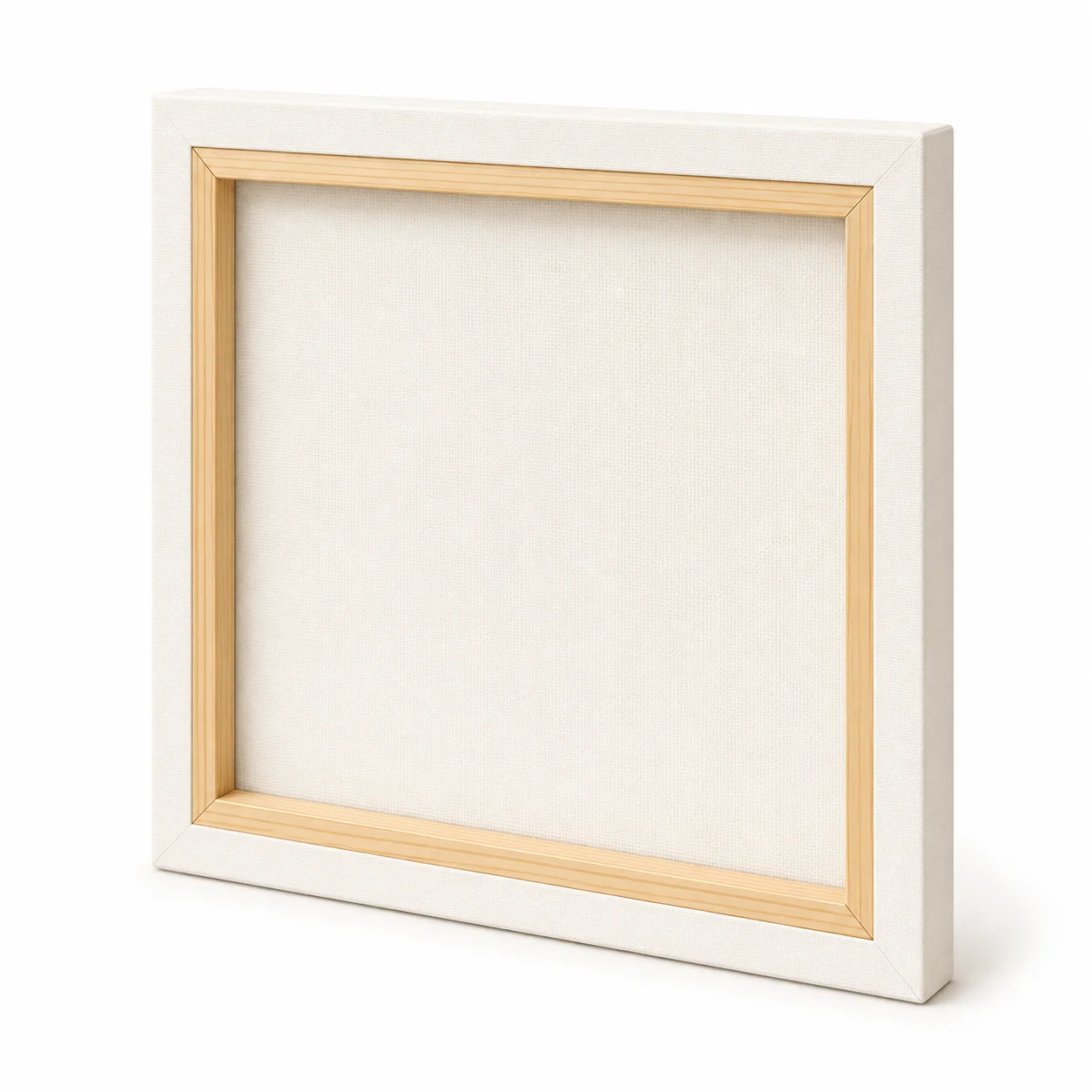
Rolled ships flat for local framing; Stretched arrives ready to hang on a quality frame. Here is how to decide.
Printed on premium canvas, made in India. Browse the collection