
Large Wall Art for Living Room: How to Pick a Statement Piece That Actually Fits
By Prizt2026-09-297 min read
How big should wall art be in a living room? The two-thirds rule, hanging heights, and 4 statement canvas picks that actually fill the wall. Sizes from ₹559.
Walk into any furniture showroom and the art on the walls looks enormous. Then people go home, order a tasteful little 12×18 inch print, hang it above their three-seater sofa — and it looks like a postage stamp that got lost.
Here is something I have noticed after years of looking at real Indian living rooms: nobody ever complains their wall art turned out too big. The regret always runs the other way. A living room is the largest, most public room in the house. It can take drama. The mistake is buying small and then wondering why the wall still feels empty.
This guide fixes that. You will learn exactly how big your art should be, how high to hang it, when to buy one big piece versus a set — and see four statement canvases that were made for exactly this job.
01The two-thirds rule: the only sizing rule you need
Interior designers argue about a lot of things. This is not one of them. Your artwork — one piece or several hung together — should span roughly two-thirds to three-quarters of the width of the furniture below it.
Why does this work? Anything narrower looks disconnected, floating above the sofa like an afterthought. Anything wider starts competing with the furniture instead of complementing it. Two-thirds is the sweet spot where the art and the sofa read as one intentional arrangement.
Here is what that means for standard sofa sizes:
02Art width to aim for, by sofa size
| Your sofa | Sofa width | Art width to aim for |
|---|---|---|
| 2-seater | 140–160 cm | 95–120 cm |
| 3-seater | 180–200 cm | 120–150 cm |
| L-shaped / sectional | 220–260 cm | 150–195 cm |
03Applying the rule to your own room
Measure your own sofa — Indian sectionals vary wildly — but if you remember nothing else from this article, remember this table. A 3-seater at 200 cm wants art around 130–150 cm wide. That is a large canvas. Most people buy half that size and then blame the wall.
On a bare feature wall with no furniture under it, the rule shifts slightly: the piece should cover at least half the wall's width. On a standard 3–3.5 metre wall, that means going 150 cm or wider. Big wall, big art. There is no way around the physics.
04How high should you hang it?
Width gets all the attention, but height is where rooms quietly go wrong. Two numbers to remember:
Above a sofa: leave 15–25 cm between the top of the sofa back and the bottom of the frame. Closer than that feels cramped; further and the art detaches from the sofa and floats on its own, unrelated to everything below it.
On an empty wall: hang it so the centre of the artwork sits about 145–150 cm from the floor — roughly eye level for an average adult. In rooms with very high ceilings, you can nudge this up, but resist the urge to "fill" tall walls by hanging art near the ceiling. Art relates to the people looking at it, not to the ceiling.
A quick test that never fails: stand where you will actually view the piece from — usually the opposite sofa or the room entrance — and have someone hold it (or hold up a newspaper cut to size) at the planned spot. If your eye goes to it naturally without tilting your head up or down, the height is right.
05One big piece or several small ones?
Both work, but they do different jobs — and for a living room, one big piece wins more often than people expect.
One large statement piece creates a single focal point. The eye lands somewhere definite, the room feels anchored, and the whole space looks more expensive than it is. This is the move when your wall is mostly empty, your furniture is simple, or you want the room to have a clear personality.
A set of two or three works when the wall is very wide, when you want a gallery feel, or when you cannot decide on one image (no shame in that). The rule: hang them close enough that they read as one block — 5–8 cm apart — and make sure the combined width still follows the two-thirds rule above.
What does not work is one small frame centred on a big empty wall, or five tiny frames scattered like confetti. If your wall is large, commit to scale. A triptych — one image split across three panels — is the elegant middle path: the drama of a large piece with the texture of a set.
06Match the art to the room, not the other way round
Scale gets the art on the wall correctly. Style is what makes guests ask where you got it. Four directions that consistently work in Indian living rooms:
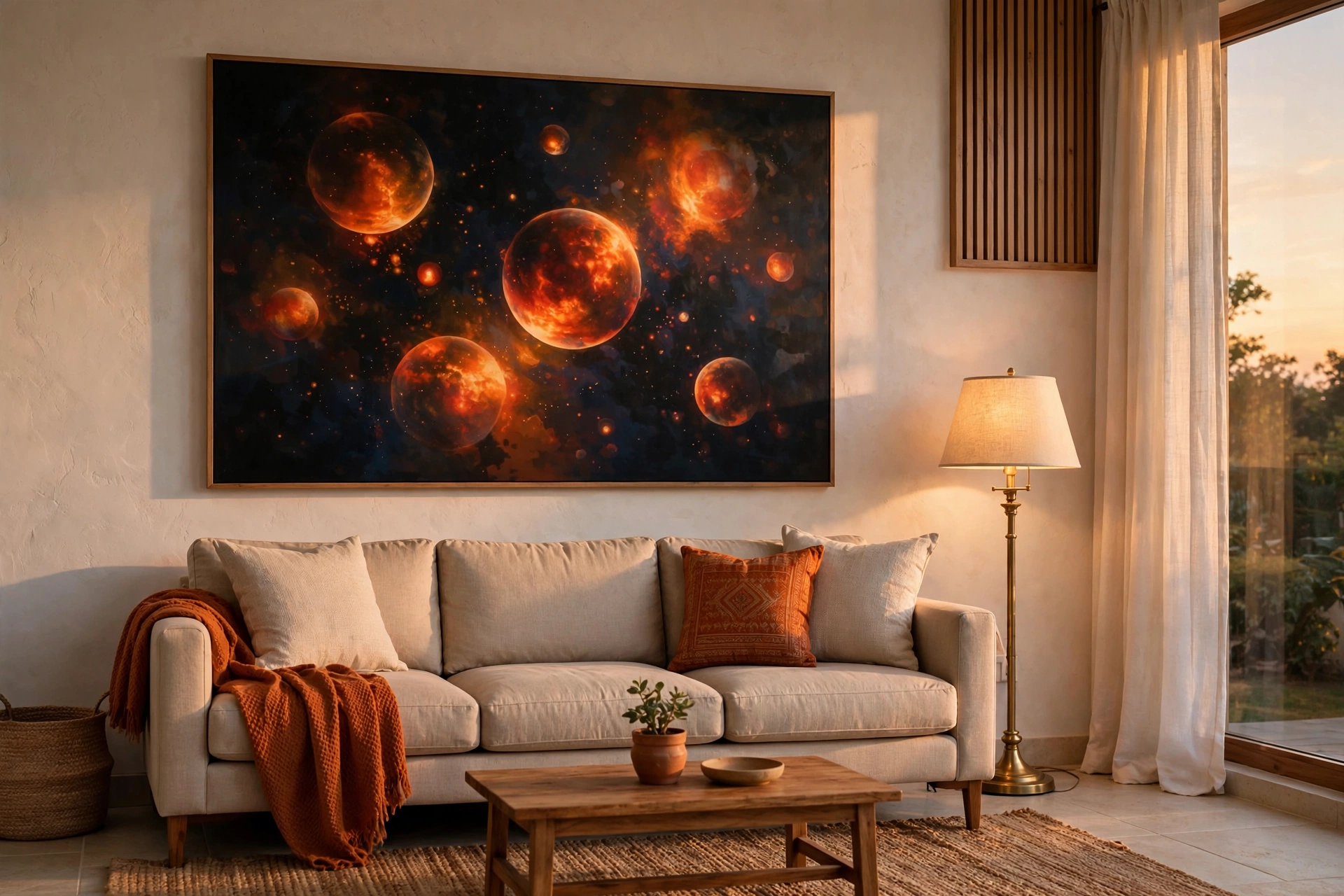
Bold abstract for modern rooms. Clean-lined furniture, neutral walls, maybe a jute rug — this room is begging for colour with confidence. Something like Celestial Spheres, all burning orange and red orbs, does the entire decorating job by itself. You do not need cushions to "match" it; abstract art at this scale is the colour scheme.
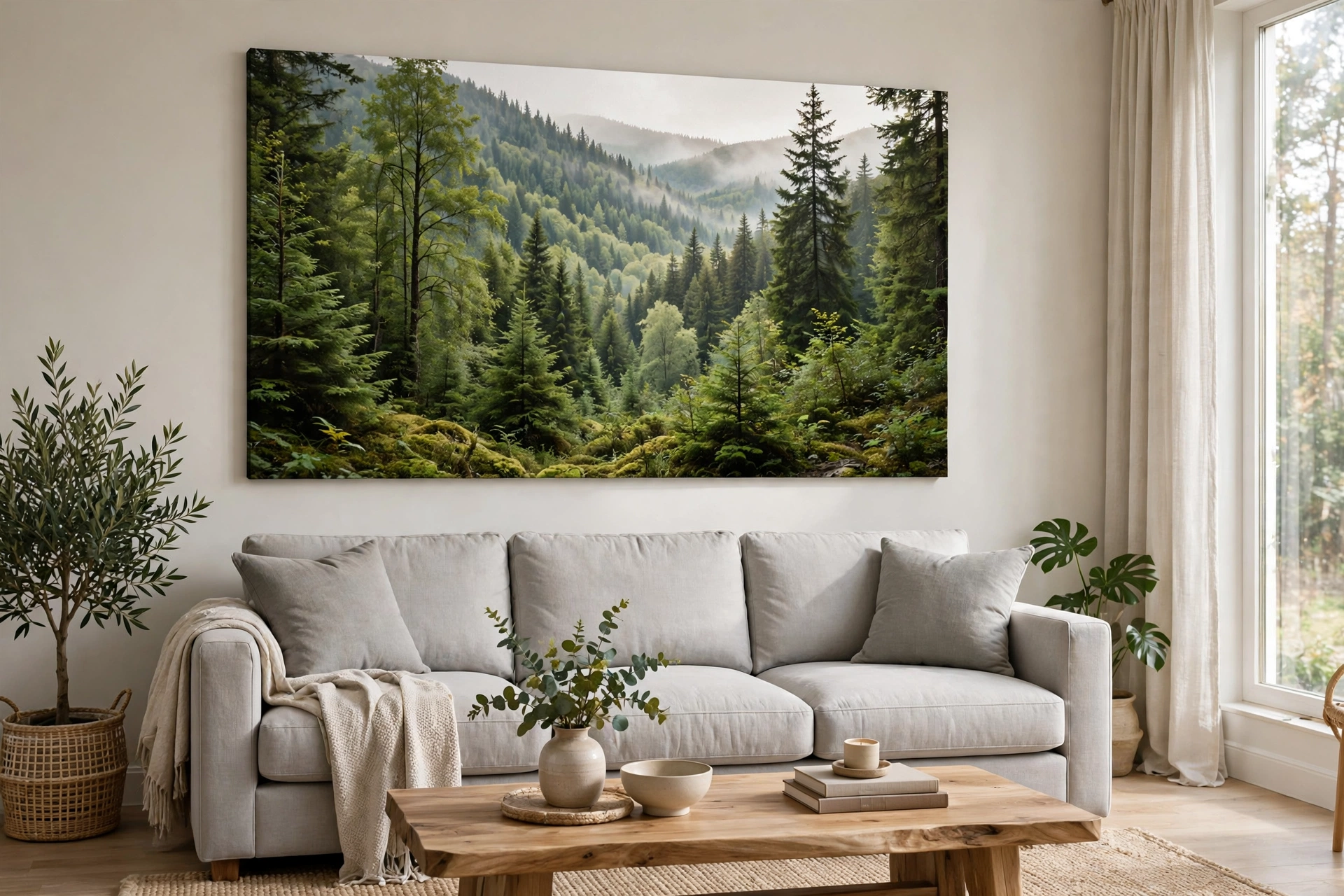
Lush nature for calm rooms. If your living room is where the family actually lands at the end of the day — warm lights, wooden furniture, plants in corners — a big landscape keeps that ease and deepens it. Enchanted Forest pulls the eye into the distance, which is a neat trick: a large nature print makes a modest-sized room feel bigger because your brain reads depth in the image as depth in the space.
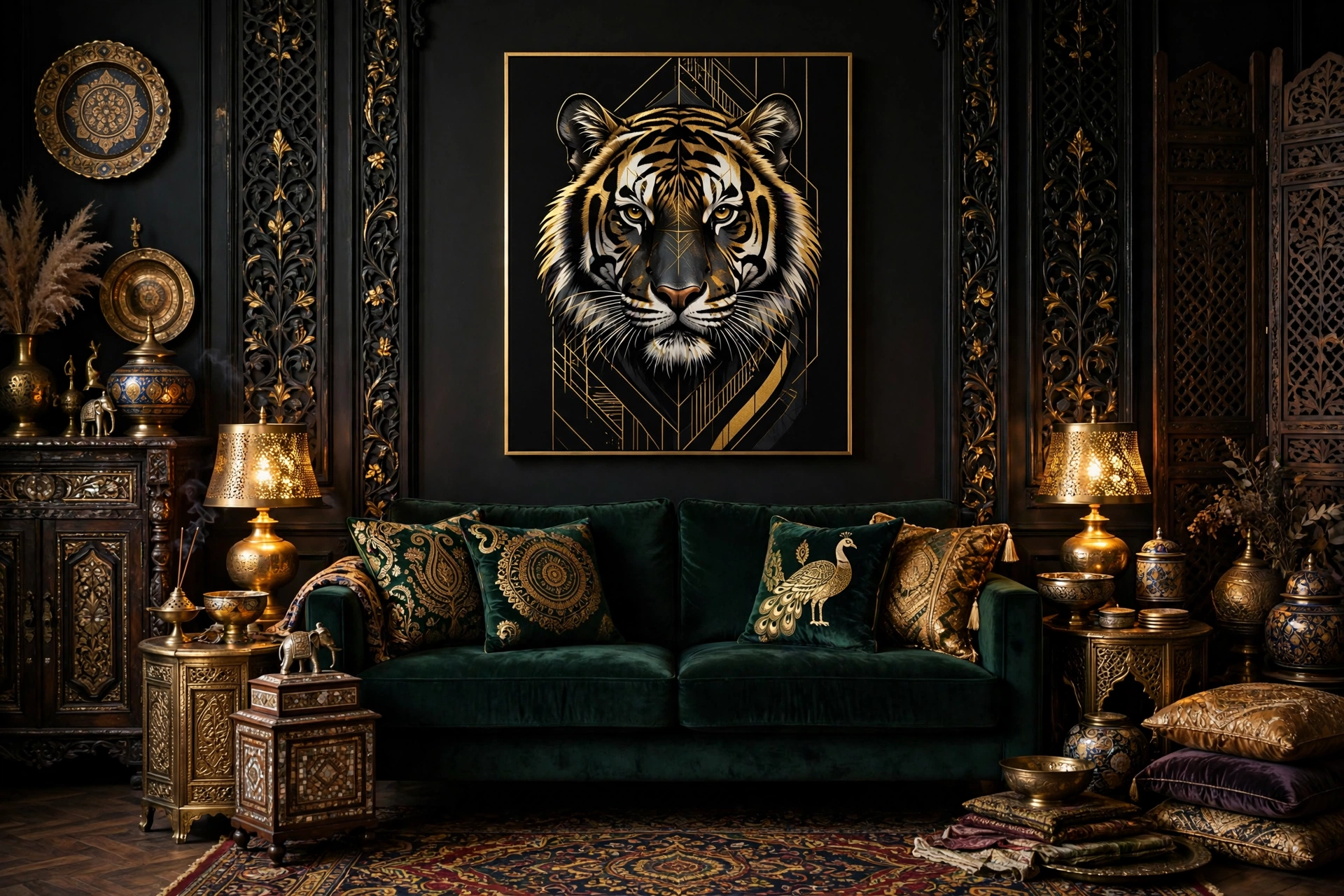
High drama for maximalist rooms. Some living rooms are not calm and were never meant to be — dark walls, brass lamps, velvet cushions. A statement piece here should not whisper. The Gold Tiger in black and gold is the kind of piece people photograph. It is unapologetic, and in the right room that is exactly the point.
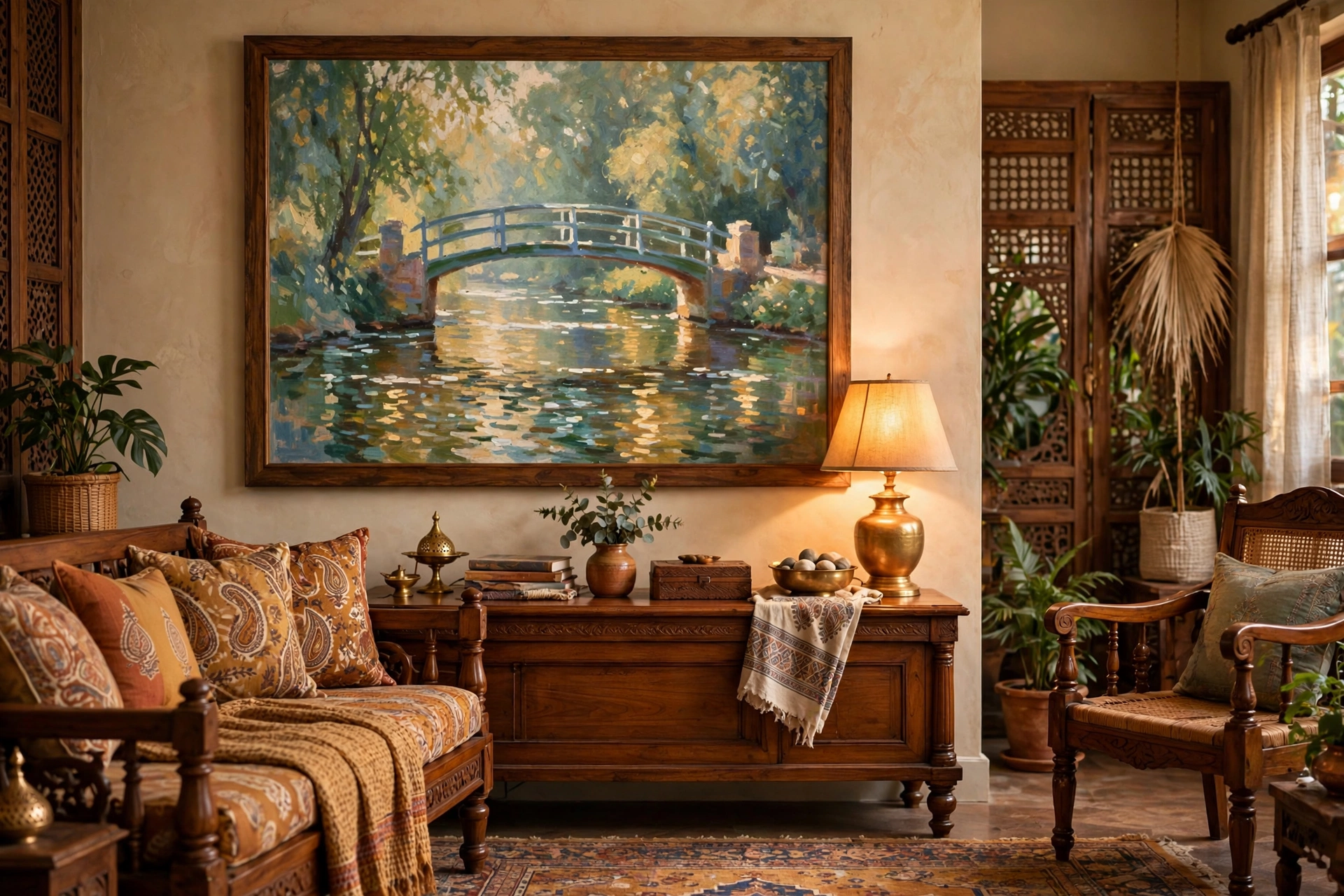
A classic for traditional rooms. Teak furniture, family portraits nearby, a room with history in it — this is where an impressionist landscape earns its place. Monet's Bridge at Argenteuil has survived 150 years of changing taste, which is a decent bet for surviving your next sofa too. Classics are classics because they stop arguing with the room.
07Sizing it with Prizt's range
Prizt canvases come in eight sizes, and for a living-room statement piece you want the top half of that range. As a rough map: the two smallest sizes suit shelves and gallery walls; the middle sizes work above consoles and in bedrooms; and the largest sizes — 24×36 inch and up — are your statement territory above a sofa or on a feature wall.
Every canvas arrives ready to hang, so a large piece does not mean a complicated installation — it goes up with the same ease as a small one, just with more presence. Prices start at ₹559, with 20% off single pieces and 30% off when you buy two or more (plus a free poster with any artwork order), which makes the "go bigger" decision easier on the wallet too.
One practical note for large canvases: check your wall type before you hang. A 36-inch canvas is light for its size, but on a gypsum partition wall, use proper anchors rather than a single nail — the same care you would give a mirror.
08The living-room sizing checklist
- Let the art span about two-thirds to three-quarters of the width of the furniture below it.
- Leave 15–25 cm between the top of the sofa back and the bottom of the frame.
- On a bare wall, centre the artwork about 145–150 cm from the floor — roughly eye level.
- For a set of two or three, keep the frames 5–8 cm apart so they read as one unit.
- When you are torn between two sizes, size up — a large canvas never looks like an afterthought.
09FAQs
Aim for art that spans two-thirds to three-quarters of your sofa's width. Over a standard 3-seater (180–200 cm), that means a piece roughly 120–150 cm wide — larger than most people first guess.
Start with a piece you love
Every Prizt canvas is printed on premium canvas in India and arrives in protective 4-layer packaging — so what lands on your wall is exactly what you picked.
Keep reading
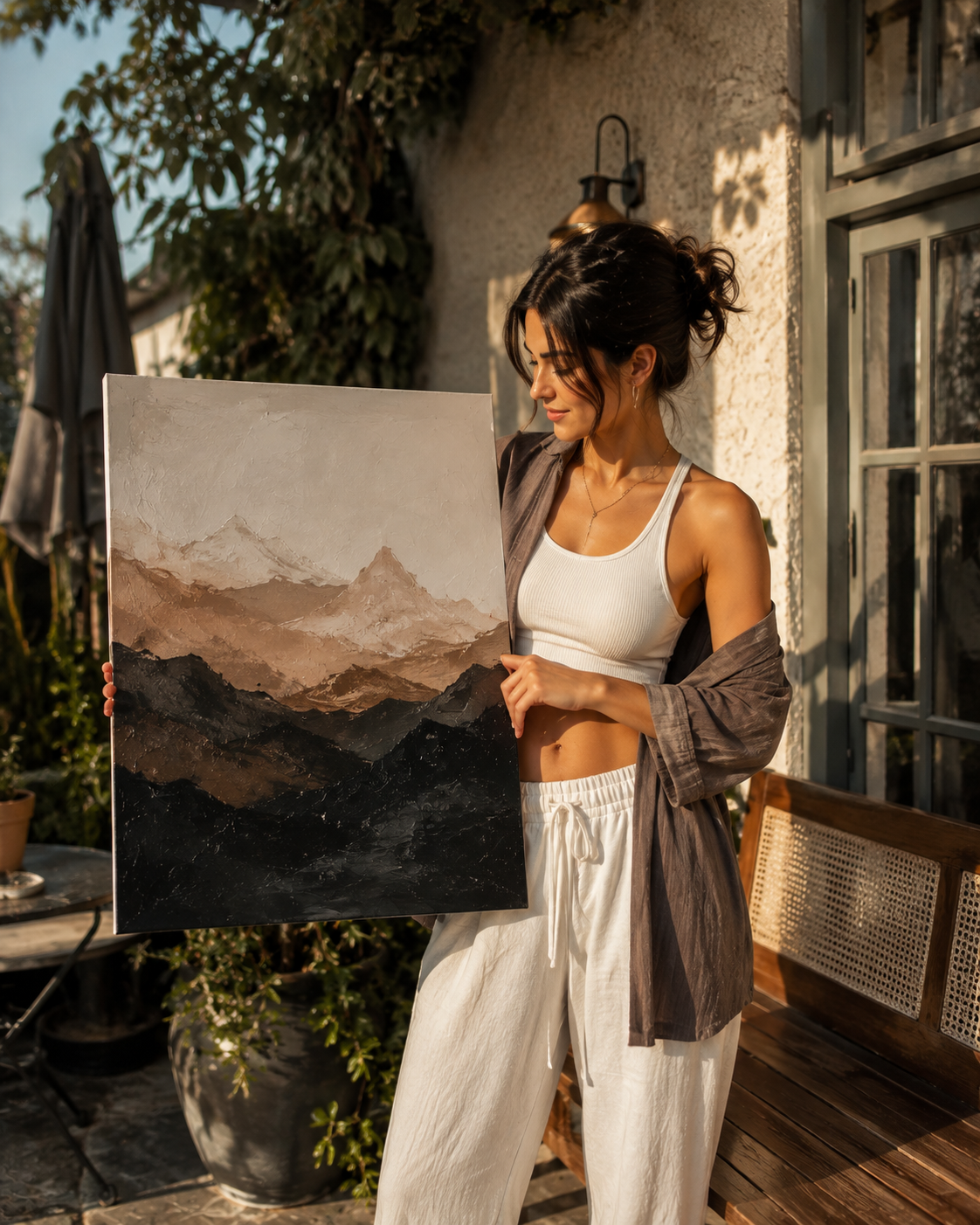
Canvas Print Size Guide: Choosing the Right Size for Every Room
Not sure which canvas size fits your wall? Here is how to match our 8 canvas sizes to the room, wall, and look you want.
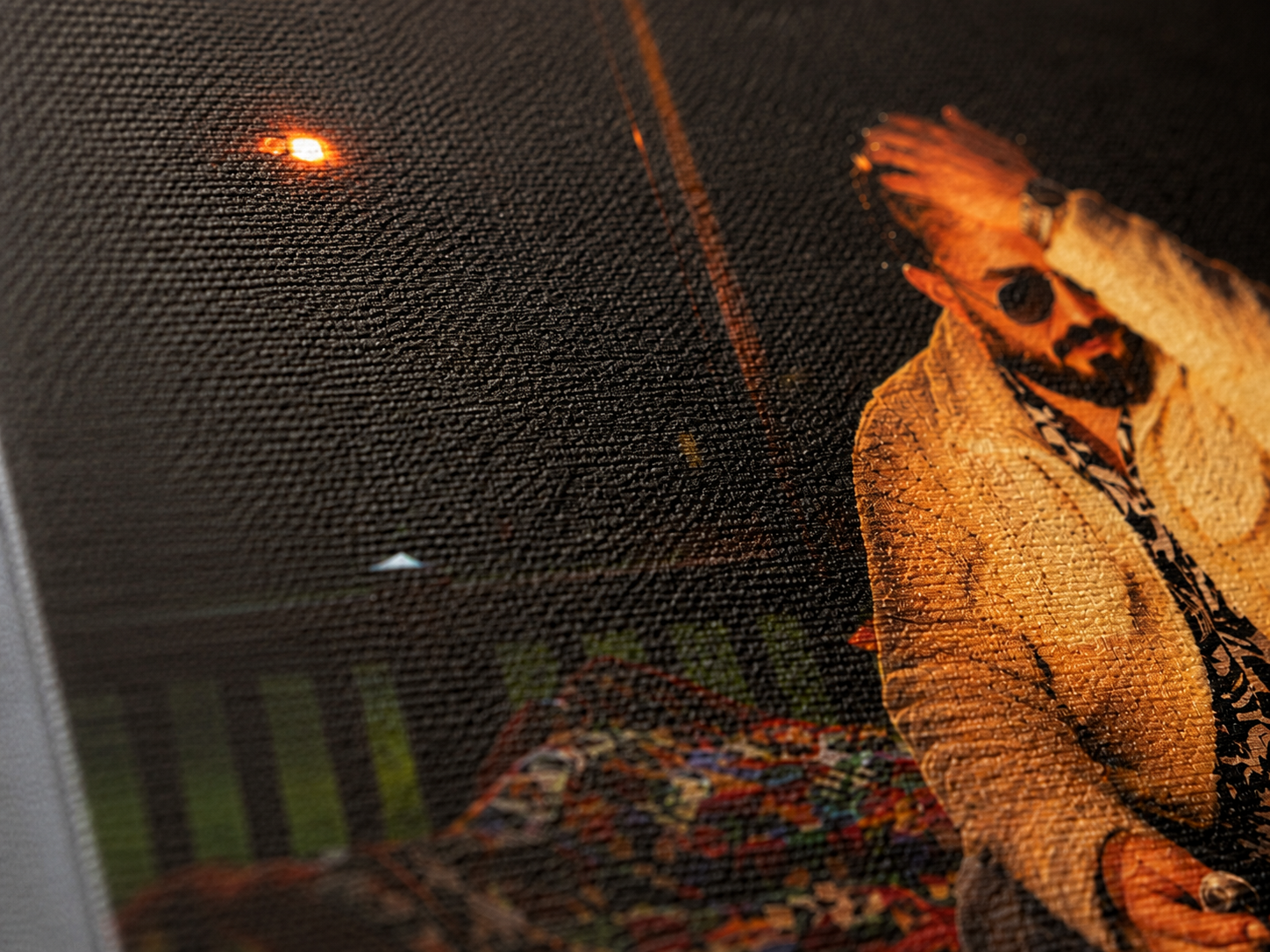
What Is Eco-Solvent Canvas Printing? Why Premium Canvas Beats Posters & Flex
Eco-Solvent printing uses low-VOC inks on real canvas for rich, durable, gallery-quality art. Here is why it beats posters, flex, and paper prints.
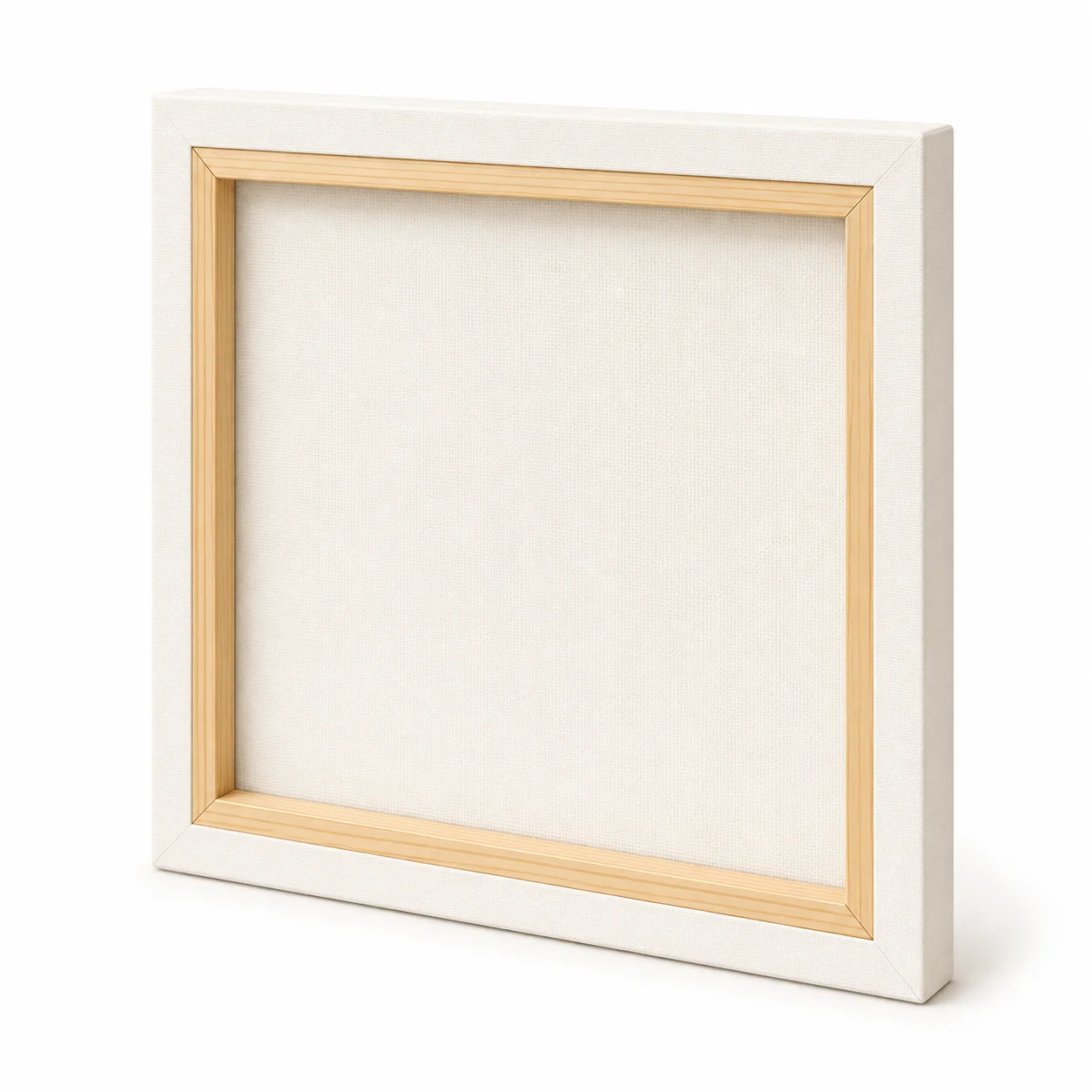
Rolled vs Stretched Canvas: Which Should You Choose?
Rolled ships flat for local framing; Stretched arrives ready to hang on a quality frame. Here is how to decide.
Printed on premium canvas, made in India. Browse the collection